If you are thinking about buying a small multi-family property in Montvale, NJ, the first thing to know is simple: this is not a market where duplexes and triplexes are everywhere. Montvale is a largely owner-occupied Bergen County suburb, which means small multi-family investing can still be possible, but it usually requires a more careful, numbers-first approach. If you want to understand where these properties fit, what local rules matter, and how to think about financing and rental demand, this guide will walk you through it. Let’s dive in.
Why Montvale looks different
Montvale is a small borough of about 4.02 square miles in Bergen County with an estimated 2024 population of 9,663. According to U.S. Census QuickFacts for Montvale, the borough has an owner-occupied housing rate of 80.0%, a median owner-occupied home value of $709,700, a median gross rent of $2,053, and a median household income of $178,269.
That profile matters if you are looking at small multi-family investing. In plain terms, Montvale reads more like an affluent commuter suburb than a classic renter-heavy multi-family market. That does not make investing impossible, but it does mean you should expect tighter inventory, stronger owner-occupant competition, and a need to be selective.
How much small multi-family exists
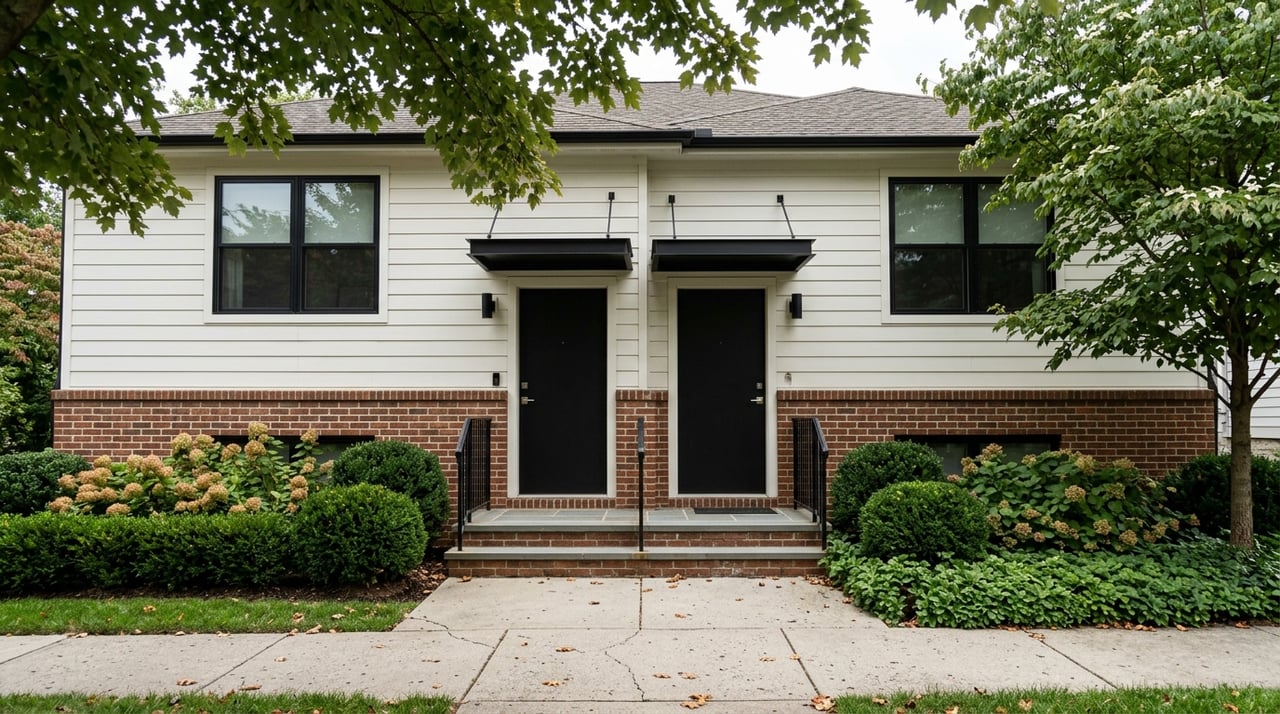
Small multi-family housing is present in Montvale, but it is still a minority of the overall housing stock. Borough housing-element material reports that the 2022 ACS housing stock totaled 3,123 units, including 208 units in two-unit structures and 269 units in three- or four-unit structures, described as duplexes, triplexes, and quadruplexes.
Combined, those two categories make up roughly 15% of the housing stock. That is enough to create opportunity for buyers who want a house-hack or a small income property, but it also means you should not expect deep inventory at any given time. In a market like this, preparation often matters as much as price.
Where multi-family is allowed
One of the biggest mistakes investors make is assuming a small multi-family property can go anywhere. In Montvale, zoning is a major part of the story.
According to the borough code, the base residential districts R-40, R-15, and R-10 permit residence for not more than one family. Multi-family uses are concentrated in areas such as the Apartment A District, the Townhouse T-6 Zone, affordable-housing districts, and planned residential developments, as outlined in the Montvale zoning code.
That means your search should start with zoning awareness, not just bedroom count or asking price. If your goal is to buy, improve, or hold a small multi-family asset, you need to understand whether the existing use is permitted and what development standards apply before you make assumptions about future value.
Planned development rules matter
Montvale’s planned-development code allows townhouses, townhouse-duplex combinations, and apartment buildings. The same code limits apartment buildings to no more than 12 dwelling units per building, with a maximum height of 35 feet and two stories, while also requiring at least 35% open space.
Parking is another practical issue. In planned residential development, the code ties parking to New Jersey Residential Site Improvement Standards and elsewhere requires 2.25 parking spaces per dwelling unit plus 0.4 visitor or common-use spaces per unit. For an investor, that matters because parking can directly affect usability, tenant appeal, and redevelopment potential.
What makes a Montvale rental attractive
In a suburb like Montvale, rentability often depends less on sheer unit count and more on day-to-day livability. Commuter access, parking, layout, and overall convenience can have an outsized impact on tenant interest.
Montvale Station serves the NJ TRANSIT Pascack Valley Line, which supports commuter demand. The borough also notes local K-8 schools in Montvale and the Pascack Valley Regional High School District for grades 9-12, which helps explain why some renters may prioritize longer-term functionality, practical layouts, and neighborhood convenience.
For investors, this usually points to a simple takeaway: a property that works well for real life may perform better than one that only looks good on paper. Off-street parking, clean unit flow, and commuter-friendly access can be especially important in this kind of market.
Competition from newer housing
Another factor to watch is incoming supply. Montvale’s 2025 Open Space and Recreation Plan says the borough has approved six residential developments that will add population, including The District with 308 multifamily units, Woodland Square with 185 multifamily units, Montvale Family Apartments with 25 units, and Village Springs at Montvale with 80 townhomes.
This does not automatically weaken the case for small multi-family investing, but it does shape strategy. If larger, newer projects add rental options, older duplexes, triplexes, or fourplexes may need to compete on price, space, parking, location, or a more residential feel. Investors should underwrite with that reality in mind rather than assuming endless pricing power.
Best use cases for investors
In Montvale, small multi-family properties may make the most sense for a few specific buyer profiles:
- House hackers who want to live in one unit and offset housing costs with rental income
- Long-term investors looking for stable suburban holdings instead of high-volume turnover
- Move-up buyers or local owners who want a property that blends personal use with income potential
- Estate or legacy buyers evaluating properties for long-term family wealth planning
Because inventory is limited, the right strategy is often less about chasing quantity and more about buying the right building at the right basis.
Financing options to know
If you plan to owner-occupy, financing may be more flexible than many buyers think. The key is understanding which loan programs apply to one- to four-unit properties.
HUD states that FHA loans are available on 1-4 unit properties with down payments as low as 3.5% for eligible borrowers. That can make an owner-occupied duplex, triplex, or fourplex more accessible, especially for first-time investors who want to enter the market gradually.
Fannie Mae’s HomeReady program also provides a path for certain buyers. The research report notes that a two- to four-unit principal residence requires a 3% minimum borrower contribution from the borrower’s own funds unless a grant applies, and rental income from a two- to four-unit principal residence can be an acceptable source of qualifying income on HomeReady loans.
That said, qualifying is not just about the down payment. Fannie Mae also has reserve requirements for two- to four-unit principal residence transactions, so buyers should expect lenders to look closely at cash reserves, income stability, and the property’s rent profile.
Local compliance you cannot ignore
Montvale adds a local compliance layer that small multi-family buyers should factor in early. Under the borough’s business and insurance registry requirements, owners of rental units and owners of owner-occupied multifamily homes with four or fewer units must maintain liability insurance and register annually with the borough.
The minimum liability coverage is $500,000 for rental units and $300,000 for owner-occupied multifamily dwellings with four or fewer units. This is a practical reminder that even a smaller property comes with operating responsibilities. Insurance, registration, and ongoing compliance should be part of your budget from day one.
What to analyze before you buy
In a market like Montvale, disciplined underwriting matters. Before you move forward, focus on these core questions:
- Is the property legally configured for its current use?
- Which zoning district is it in, and what does that allow?
- How does parking work for residents and guests?
- How does the layout compare with what renters in a commuter suburb may want?
- How might newer multifamily developments affect future rent growth or competition?
- What insurance, registration, and reserve requirements will apply?
If you are house hacking, also ask whether the owner-occupied financing benefits outweigh the tradeoff of sharing the property with tenants. If you are buying purely as an investor, you will want to be even more conservative on expenses, rent assumptions, and vacancy risk.
Why local guidance matters
Montvale is not the kind of market where a generic investing playbook always works. The opportunities are real, but they tend to be more nuanced because small multi-family stock is limited, zoning is specific, and newer development can shift the competitive landscape.
That is why local analysis matters. You want to look beyond list price and rent guesses and instead evaluate zoning, positioning, commuter appeal, operating requirements, and exit strategy. A property can look promising at first glance and still miss the mark once you factor in local realities.
If you are exploring a duplex, triplex, or fourplex in Bergen County and want an investor-minded read on the numbers and the fit, Jacqueline Vasquez can help you evaluate opportunities with a clear, data-driven strategy.
FAQs
Is small multi-family investing common in Montvale, NJ?
- Small multi-family properties exist in Montvale, but they are a minority of the housing stock, with two-unit and three- to four-unit structures making up roughly 15% of total housing units based on borough housing-element material.
Can you buy a duplex or triplex in Montvale, NJ and live in one unit?
- Yes, owner-occupying a one- to four-unit property may be possible, and financing options such as FHA and certain conventional programs can apply if you meet lender requirements.
Does Montvale, NJ zoning allow multi-family everywhere?
- No, Montvale’s base residential districts generally permit no more than one family, while multi-family uses are concentrated in specific districts and planned residential developments.
What financing works for a small multi-family property in Montvale, NJ?
- FHA loans may allow down payments as low as 3.5% on 1-4 unit properties, and Fannie Mae HomeReady may allow qualifying rental income on a two- to four-unit principal residence, subject to program and lender rules.
What local rules apply to rental property owners in Montvale, NJ?
- Montvale requires annual registration and minimum liability insurance for rental units and certain owner-occupied multifamily properties, so buyers should plan for those compliance costs and responsibilities.
What affects rental demand for small multi-family property in Montvale, NJ?
- Rental demand may be shaped by commuter access to Montvale Station, parking, unit layout, and competition from newer approved residential developments in the borough.