Torn between a townhouse and a condo in Nyack? You are not alone. With the riverfront vibe, historic buildings, and a lively downtown, the right fit depends on how you want to live and what you need from your home. In this guide, you will get clear definitions, a side-by-side look at costs and responsibilities, Nyack-specific risks like flood zones and parking, plus tips for financing and resale.
Let’s dive in.
Townhouse vs condo basics
Understanding how ownership works will shape everything from financing to monthly costs.
What a condo means
- You own the interior of your unit and share ownership of common areas like hallways, roof, and grounds.
- The condo association handles exterior maintenance and common services. You pay a monthly fee for these.
- You carry HO-6 insurance for your unit’s interior. The association holds a master policy for the building and shared spaces.
- Rules can be strict. Associations may regulate pets, rentals, renovations, and even exterior finishes.
What a townhouse means
- In Nyack, “townhouse” can mean two things. It can be a fee-simple townhouse where you own the land and structure, or a townhouse-style condo that looks like a townhouse but is governed as a condo. Always confirm the ownership type in each listing.
- Fee-simple townhouses feel like single-family homes. You are responsible for exterior, roof, and yard. There may be an HOA, but not always.
- You carry HO-3 dwelling insurance, usually higher than condo interior-only coverage.
- Rules vary. If there is an HOA, expect community guidelines. If not, you follow municipal codes.
What works in Nyack’s locations
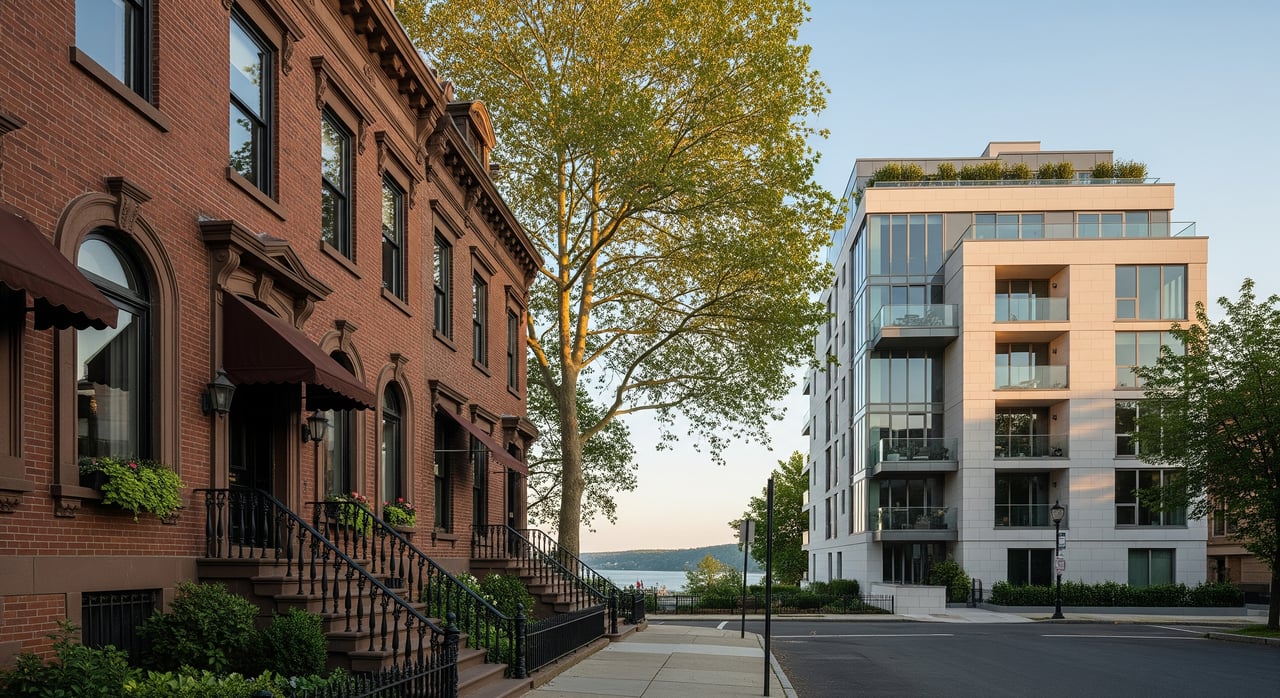
Nyack offers a mix of historic conversions, small condo buildings, and attached townhomes. Your lifestyle and commute can guide your choice.
Downtown walkability and condos
If you want to live near Main Street and Broadway, condos and condo conversions dominate. You get low exterior maintenance and quick access to restaurants, galleries, and shops. For many commuters, the ability to walk to amenities and use bus lines or a quick drive to park-and-ride lots is a major plus. Parking terms matter here. Confirm assigned spaces, guest parking, and any municipal permits.
Townhouse options on the village edge
On the edges of the village and nearby suburbs, you will find more fee-simple townhouses. These often offer multi-level living, private entries, a garage or driveway, and sometimes a small yard. If you want more privacy and control of your exterior, townhouses can work well.
Cost comparison the Nyack way
A smart way to compare is to total your full monthly carrying cost. Add these line items:
- Mortgage and interest.
- Property taxes for the unit or home.
- Monthly HOA or condo fees if any.
- Homeowner insurance. HO-6 for condos is generally lower than HO-3 for fee-simple townhouses.
- Utilities that are not included in fees.
- Estimated maintenance and repairs. Condos pool exterior costs. Townhouses put more responsibility on you.
Tip: Taxes in Rockland County and local school and village taxes are a major expense. For current assessed values and tax lookups, check the Rockland County Real Property Tax Service for official guidance. You can start with the county’s resource page and speak with the assessor’s office for exact figures when you have a specific property.
Flood and environmental risk near the Hudson
Nyack’s river setting is part of its charm, but flood exposure can affect your decision.
- Some downtown and waterfront properties sit in or near FEMA flood zones. If a home is in a Special Flood Hazard Area, lenders will require flood insurance.
- Even outside mapped zones, proximity to the river or local drainage can influence premiums and risk.
- Condos should carry master flood coverage where applicable. Confirm what the policy covers. Fee-simple townhouse owners handle their own building and contents coverage.
Before you go to contract, review the property’s location on the FEMA Flood Map Service Center. If the home is in a historic area or near the core, also confirm any exterior change rules or permit requirements with the Village of Nyack.
Rules, governance, and lifestyle
Your daily life can change based on community rules.
- Condos often limit short-term rentals, set pet policies, and control renovations. Ask for the declaration, bylaws, and rules early.
- If you are considering rental income, confirm both association and municipal requirements. Short-term rental rules can be strict.
- Townhouses in an HOA may have similar rules. Stand-alone fee-simple townhouses follow village codes and any deed restrictions.
When reviewing a condo, request financial statements, reserve studies, meeting minutes, a condo questionnaire for your lender, and proof of insurance. Look for healthy reserves and any pending special assessments.
Financing in Rockland County
Financing can be simpler or more complex depending on the property type.
- Lenders evaluate condo associations closely. They review reserves, owner occupancy, commercial space percentages, and any litigation. You can see current standards in Fannie Mae’s condo project guidelines.
- If you plan to use FHA financing, the building may need to be on the HUD FHA-approved condo list. Ask your lender to check.
- Fee-simple townhouses are often treated like single-family homes. That can make traditional mortgage approval more straightforward.
If a condo conversion is older or paperwork is incomplete, some buyers use portfolio loans. Speak with a local lender who knows Rockland County condo projects and can confirm eligibility early.
Insurance differences to expect
Insurance is part of your monthly math.
- Condos: You typically carry HO-6 insurance for interior walls-in and personal property. The association holds the master policy for the building and common areas. Ask what the master policy covers so you avoid gaps.
- Townhouses: Fee-simple townhouses usually require HO-3 coverage for the full structure and often have higher premiums. If there is an HOA, confirm any shared coverage and what remains your responsibility.
- Flood insurance: Check the FEMA map early. In a mapped Special Flood Hazard Area, flood insurance is usually required by the lender and can be material to the budget.
Resale signals in the Nyack market
What tends to sell well depends on buyer demand in the moment.
- Condos in well-managed buildings near the core often sell quickly when they pair walkability with strong reserves and clear governance. Buildings with litigation or weak reserves can slow sales and limit financing.
- Townhouses with private entrances, parking, and outdoor space attract buyers who want more room and control of the exterior. Visible deferred maintenance can hurt buyer interest.
- Investor appeal hinges on rental rules. Strict bans limit the investor pool, while flexible rules can improve demand if the building’s finances are strong.
When you list, present a clean summary of what the fee includes or excludes, parking rights, storage, flood status, and any recent capital projects. Buyers respond to clarity.
Practical due-diligence checklist
Use this checklist when you compare two Nyack homes.
- Verify property type. Is it a fee-simple townhouse, a townhouse-style condo, or a traditional condo unit?
- Review association documents. Budget, reserves, reserve study, meeting minutes, insurance certificates, declaration and rules, litigation history, and special assessments.
- Confirm flood status. Look up the address on the FEMA Flood Map Service Center and ask for any existing flood policy details.
- Parking. Verify assigned spaces, guest parking, and any municipal permit requirements.
- Taxes. Get the current tax bill and ask the assessor how assessments are applied. For county-level resources, start with the Rockland County Real Property Tax Service.
- Utilities and services. Confirm municipal water and sewer or any private systems. Ask about snow removal and trash, and who pays.
- Historic and exterior rules. If near the core, check village guidelines for exterior changes on historic properties through the Village of Nyack.
- Lender checks. If you are buying a condo, ask your lender about project eligibility and any association questionnaires.
- Physical inspections. Evaluate roof, façade, foundation, drainage, HVAC, and any shared systems. Older Hudson Valley buildings may have unique masonry and drainage needs.
Which one fits your lifestyle?
Choose a condo if you want low exterior maintenance, a walkable location, and amenities bundled into a monthly fee. This often appeals to commuters, downsizers, and first-time buyers who value simplicity and access to downtown.
Choose a townhouse if you want more privacy, multi-level living, a garage or driveway, and control over your exterior. Families and buyers who want flexible space or outdoor areas often lean this way.
If you are unsure, line up two properties and compare the true monthly cost, rules, parking access, flood exposure, and financing path. A side-by-side review usually makes the answer obvious.
Ready to compare options in Nyack?
If you want a clear, data-first view of your options, I am here to help you weigh ownership structure, flood risk, financing, and resale potential. I work across Rockland County and can coordinate the right lender, insurance, and inspection pros so you make a confident choice.
Let’s connect to build your plan. Unknown Company
FAQs
What is the key difference between a condo and a townhouse in Nyack?
- A condo owner typically owns the interior and shares common areas through an association, while a fee-simple townhouse owner holds the land and structure and handles more exterior maintenance.
How do HOA or condo fees affect my monthly costs in Nyack?
- Condo fees often cover exterior maintenance, common utilities, and master insurance, while fee-simple townhouses may have lower or no fees but higher individual insurance and maintenance costs.
Is a condo or a townhouse easier to finance in Rockland County?
- Fee-simple townhouses are often simpler to finance like single-family homes, while condos may require extra lender review of the association and, for some loans, project approvals.
How does flood risk on the Hudson River impact my choice?
- If a property sits in a FEMA Special Flood Hazard Area, lenders usually require flood insurance, so always check the address on the FEMA Flood Map Service Center before you commit.
What documents should I review before buying a Nyack condo?
- Ask for the declaration, bylaws, rules, budget, reserves and reserve study, meeting minutes, insurance certificates, any special assessments, and confirmation of lending eligibility like FHA or VA status.